Thursday, October 24, 2013

Hermit Cookies

Why this recipe works:
Most recipes for Hermit Cookies we tested involved creaming the butter, but this produced dry, biscuitlike cookies. Melting the butter delivered a chewier, moister cookie. We took melting one step further by cooking the butter in a saucepan until light brown and fragrant, which added a nutty flavor to the hermits. Tasters settled on the simple, yet potent, combination of cinnamon, allspice, and ginger. Adding these spices to the browned butter bloomed their natural flavor, which allowed us to use less. This avoided a dusty texture from too much ground spice. We steeped the raisins in melted butter to soften them, and pureed them with crystallized ginger into a rough paste. This helped distribute raisin flavor into every bite, while the pureed ginger lent pungent sweetness and chew. When it came to shaping them, we found that hermits baked in logs and then sliced were much chewier and moister. (less)

Makes about 18 cookies

For this recipe, we prefer using mild (or light) molasses instead of the robust or blackstrap varieties.

Ingredients

  • 1 cup raisins
  • 2 tablespoons finely chopped crystallized ginger
  • 8 tablespoons unsalted butter
  • 1 teaspoon ground cinnamon
  • 1/4 teaspoon ground allspice
  • 2 cups (10 ounces) all-purpose flour
  • 1/2 teaspoon baking soda
  • 1/2 teaspoon salt
  • 3/4 cup packed (5 1/4 ounces) dark brown sugar
  • 1/2 cup molasses
  • 2 large eggs
  • 1 1/2 tablespoons orange juice
  • 3/4 cup (3 ounces) confectioners' sugar

Instructions

  1. 1. Adjust oven racks to upper-middle and lower-middle positions and heat oven to 350 degrees. Line 2 baking sheets with parchment paper. Process raisins and ginger in food processor until mixture sticks together and only small pieces remain, about 10 seconds. Transfer mixture to large bowl.
  2. 2. Heat butter in small saucepan over medium-low heat, swirling pan occasionally, until nutty brown in color, about 10 minutes. Stir in cinnamon and allspice and cook until fragrant, about 15 seconds. Stir butter mixture into raisin mixture until well combined; let cool to room temperature.
  3. 3. Combine flour, baking soda, and salt in bowl. Stir brown sugar, molasses, and eggs into cooled butter-raisin mixture until incorporated. Fold in flour mixture (dough will be very sticky) and refrigerate, covered, until firm, at least 1 1/2 hours or up to 24 hours.
  4. 4. Divide dough into quarters. Transfer 1 piece of dough to lightly floured surface and roll into 10-inch log. Transfer to prepared sheet and use ruler to neatly square off sides. (Each sheet will contain 2 logs.) Repeat with remaining dough. Bake until only shallow indentation remains on edges when touched (center will appear slightly soft), 15 to 20 minutes, switching and rotating sheets halfway through baking. Let logs cool on baking sheets for 5 minutes; transfer parchment to wire racks and let cool completely.
  5. 5. Whisk orange juice and confectioners’ sugar in small bowl until smooth. Drizzle glaze onto cooled logs and let sit until glaze hardens, about 15 minutes. Cut logs into 2-inch bars and serve.

Monday, October 21, 2013

Really Good Brownies

Really Good Brownies
America’s Test Kitchen
Makes twenty-four 2-inch brownies
For the chewiest texture, it is important to let the brownies cool thoroughly before cutting. If your baking dish is glass, cool the brownies 10 minutes, then remove them promptly from the pan (otherwise, the superior heat retention of glass can lead to overbaking). While any high-quality chocolate can be used in this recipe, our preferred brands of bittersweet chocolate are Callebaut Intense Dark Chocolate L-60-40NV and Ghirardelli Bittersweet Chocolate Baking Bar. Our preferred brand of unsweetened chocolate is Scharffen Berger. Leftovers can be stored in an airtight container at room temperature for up to 4 days.
1/3 (1 ounce) cup Dutch-processed cocoa
1 1/2 teaspoons instant espresso (optional)
1/2 cup plus 2 tablespoons boiling water
2 ounces unsweetened chocolate, finely chopped (see note)
4 tablespoons (½ stick) unsalted butter, melted
1/2 cup plus 2 tablespoons vegetable oil
2 large eggs
2 large egg yolks
2 teaspoons vanilla extract
2 1/2 cups (17½ ounces) sugar
1 3/4 cups (8¾ ounces) unbleached all-purpose flour
3/4 teaspoon table salt
6 ounces bittersweet chocolate, cut into ½-inch pieces (see note)
1. Adjust oven rack to lowest position and heat oven to 350 degrees. Make a foil sling using the following steps: Cut 18-inch length foil and fold lengthwise to 8-inch width. Fit foil into length of 13 by 9-inch baking pan, pushing it into corners and up sides of pan; allow excess to overhang pan edges. Cut 14-inch length foil and fit into width of pan in the same manner, perpendicular to the first sheet (if using extra-wide foil, fold second sheet lengthwise to 12-inch width). Spray with nonstick cooking spray.
2. Whisk cocoa, espresso powder (if using), and boiling water together in large bowl until smooth. Add unsweetened chocolate and whisk until chocolate is melted. Whisk in melted butter and oil. (Mixture may look curdled.) Add eggs, yolks, and vanilla and continue to whisk until smooth and homogeneous. Whisk in sugar until fully incorporated. Add flour and salt and mix with rubber spatula until combined. Fold in bittersweet chocolate pieces.
3. Scrape batter into prepared pan and bake until toothpick inserted halfway between edge and center comes out with just a few moist crumbs attached, 30 to 35 minutes. Transfer pan to wire rack and cool 1½ hours.
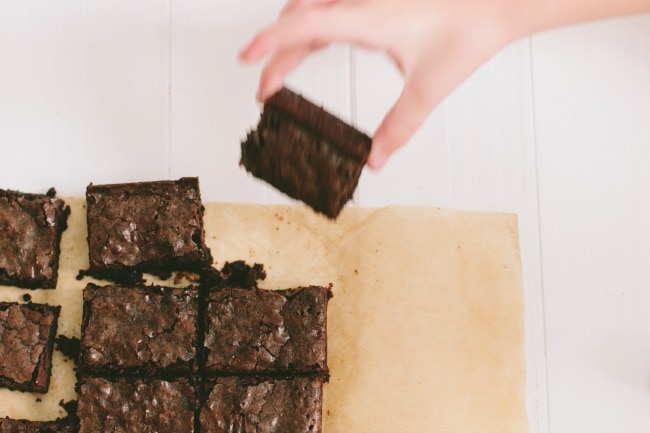
4. Using foil overhang, lift brownies from pan. Return brownies to wire rack and let cool completely, about 1 hour. Cut into 2-inch squares and serve.
really good brownies + a giveaway | the vanilla bean blog

Thursday, October 17, 2013

German Chocolate Cake with Coconut-Pecan Filling

Published January 1, 2005.  
Serves 12 to 16.  

Why this recipe works:

We wanted a streamlined German chocolate cake recipe that would be less sweet and more chocolaty than the original. After testing, we discovered that the texture of the cake actually improved when we used whole eggs instead of laboriously separating the eggs, beating the whites, and folding them into the batter. We enhanced the chocolate flavor with a combination of cocoa powder and high-quality semisweet or bittersweet chocolate. Finally, we adjusted the level and proportions of the sugar (both brown and white) and butter in the cake and filling, and toasted the pecans, for a German chocolate cake that was easier to make and had better texture and flavor than the original.
When you assemble the cake, the filling should be cool or cold (or room temperature, at the very warmest). To be time-efficient, first make the filling, then use the refrigeration time to prepare, bake, and cool the cakes. The toasted pecans are stirred into the filling just before assembly to keep them from becoming soft and soggy.

Ingredients

  • Filling
  • 4 egg yolks
  • 1can evaporated milk (12 ounces)
  • 1cup granulated sugar (7 ounces)
  • 1/4cup packed light brown sugar (1 3/4 ounces)
  • 6tablespoons unsalted butter (3/4 stick), cut into 6 pieces
  • 1/8teaspoon table salt
  • 2teaspoons vanilla extract
  • 2 1/3cups sweetened shredded coconut (7 ounces)
  • 1 1/2cups finely chopped pecans (6 1/2 ounces), toasted on baking sheet in 350-degree oven until fragrant and browned, about 8 minutes
  • Cake
  • 4ounces semisweet or bittersweet chocolate , chopped fine
  • 1/4cup Dutch-processed cocoa , sifted
  • 1/2cup boiling water
  • 2cups unbleached all-purpose flour (10 ounces), plus additional for dusting cake pans
  • 3/4teaspoon baking soda
  • 12tablespoons unsalted butter (1 1/2 sticks), softened
  • 1cup granulated sugar (7 ounces)
  • 2/3cup packed light brown sugar (about 4 3/4 ounces)
  • 3/4teaspoon table salt
  • 4 large eggs , room temperature
  • 1teaspoon vanilla extract
  • 3/4cup sour cream , room temperature

Instructions

  1. 1. FOR THE FILLING: Whisk yolks in medium saucepan; gradually whisk in evaporated milk. Add sugars, butter, and salt and cook over medium-high heat, whisking constantly, until mixture is boiling, frothy, and slightly thickened, about 6 minutes. Transfer mixture to bowl, whisk in vanilla, then stir in coconut. Cool until just warm, cover with plastic wrap, and refrigerate until cool or cold, at least 2 hours or up to 3 days. (Pecans are stirred in just before cake assembly.)
  2. 2. FOR THE CAKE: Adjust oven rack to lower-middle position; heat oven to 350 degrees. Combine chocolate and cocoa in small bowl; pour boiling water over and let stand to melt chocolate, about 2 minutes. Whisk until smooth; set aside until cooled to room temperature.
  3. 3. Meanwhile, spray two 9-inch-round by 2-inch-high straight-sided cake pans with nonstick cooking spray; line bottoms with parchment or waxed paper rounds. Spray paper rounds, dust pans with flour, and knock out excess. Sift flour and baking soda into medium bowl or onto sheet of parchment or waxed paper.
  4. 4. In bowl of standing mixer, beat butter, sugars, and salt at medium-low speed until sugar is moistened, about 30 seconds. Increase speed to medium-high and beat until mixture is light and fluffy, about 4 minutes, scraping down bowl with rubber spatula halfway through. With mixer running at medium speed, add eggs one at a time, beating well after each addition and scraping down bowl halfway through. Beat in vanilla; increase speed to medium-high and beat until light and fluffy, about 45 seconds. With mixer running at low speed, add chocolate, then increase speed to medium and beat until combined, about 30 seconds, scraping down bowl once (batter may appear broken). With mixer running at low speed, add dry ingredients in 3 additions, alternating with sour cream (in 2 additions), beginning and ending with dry ingredients, and beating in each addition until barely combined. After final flour addition, beat on low until just combined, then stir batter by hand with rubber spatula, scraping bottom and sides of bowl, to ensure that batter is homogenous (batter will be thick). Divide batter evenly between prepared cake pans; spread batter to edges of pans with rubber spatula and smooth surfaces.
  5. 5. Bake cakes until toothpick inserted into center of cakes comes out clean, about 30 minutes. Cool in pans 10 minutes, then invert cakes onto greased wire rack; peel off and discard paper rounds. Cool cakes to room temperature before filling, about 1 hour. (Cooled cakes can be wrapped in plastic wrap and stored at room temperature for up to 1 day.)
  6. 6. TO ASSEMBLE: Stir toasted pecans into chilled filling. Set one cake on serving platter or cardboard round cut slightly smaller than cake, and second cake on work surface (or leave on wire rack). With serrated knife held so that blade is parallel with work surface, use sawing motion to cut each cake into two even layers. Starting with first cake, carefully lift off top layer and set aside. Using icing spatula, distribute about 1 cup filling evenly on cake, spreading filling to very edge of cake and leveling surface. Carefully place upper cake layer on top of filling; repeat using remaining filling and cake layers. If necessary, dust crumbs off platter; serve or refrigerate cake, covered loosely with foil, up to 4 hours (if refrigerated longer than 2 hours, let cake stand at room temperature 15 to 20 minutes before serving).

Step-by-Step

Assembling the German Chocolate Cake
1. With serrated knife, halve each cake evenly through equator.
2. Carefully lift off upper cake layer and set aside.
3. Evenly distribute about 1 cup filling on bottom cake layer.
4. Place next cake layer on top and repeat process.

Tuesday, September 24, 2013

Salami artichoke stromboli

1 recipe pizza dough
1 Oz salami (chopped into 3/4 inch pieces)
1/4 cup pecorino Romano
1/2 cup mozzarella
1 can diced fire roasted tomatoes
1/2 tsp oregano
5 olives
Salt
Pepper
1 tbls extra virgin olive oil
1 can quartered artichoke hearts


Preheat oven to 400

Pulse tomatoes, olives, olive oil, and oregano until crushed and thoroughly mixed.

Roll pizza into a 16 by 12 inch rectangle. Spread sauce In the middle third of the dough. Layer with Artichokes, cheeses, and salami. Cut the remaining dough into strips diagonally, so that you may fold them over the filling, crimping the sides together to contain the filling. Brush with olive oil.

Bake at 400 for 20 min. Let cool. Slice and serve.

Nana's Cheesecake

1 pkg graham crackers (16 squares or 8 rectangles)
1/4 cup melted butter
2 tablespoons sugar
Sprinkle of cinnamon

1 1/2 lbs cream cheese
4 eggs
1 cup sugar
2 t vanilla

1 lb sour cream
1/4 cup sugar
2 teaspoons vanilla

Preheat oven to 350

Crush graham crackers up in a food processor until fine. Add sugar and cinnamon. Pour in melted butter while mixing.

Pat into a nine or 10 inch spring form pan using a cup measure to press up the side and even the crust out.
Bake for 10 minutes. Let cool.

Beat room temperature cream cheese until smooth. Do not over mix. Slowly stream in one cup of sugar until incorporated. Scrape down sides, then add room temperature eggs one at a time. Scraping down sides as needed. Add vanilla. Mix until incorporated.

Cover the bottom and sides of your spring form pan with tinfoil to create a water tight seal. Place pan in a large baking pan or roasting pan. Pour batter over cooled crust, and place in oven. Bring enough water to boil to reach halfway up the sides of the pan. Pour water into large baking pan while it is in the oven to prevent burns and splashing.

Bake for 65 minutes checking on the cheesecake at 50 minutes every five minutes for doneness. Cheesecake is done when you wiggle it, and it's still a little jiggly in the center. Open door for a few seconds to release some heat and close door leaving cheesecake in the oven for 20 min.

Pull cheesecake out, and top with sour cream mixture. Spreading it evenly. Place back in the oven, close the door and leave for 40 minutes.

Remove cheesecake and let cool on a cooling rack and cover with an inverted plate. This prevents cracking. Once it is room temp, let set for six hrs in the refrigerator.

Enjoy!


Sunday, May 27, 2012

Cast Iron Skillet Cornbread

Directions
This is a great recipe and tastes better when cooked in a cast iron skillet and served hot tableside. Use a 9-10 inch skillet to feed 8-10. For a 12 inch skillet (to feed 12-16) use 1 1/2 of this recipe. I serve this with 1 1/2 sticks UNSALTED butter just barely at room temp (not too soft) whipped with a cup of raw honey. It makes an amazing fluffy "frosting" as Stella likes to call it.

Ingredients
1 1/4 cups coarsely ground cornmeal
3/4 cup all-purpose flour
1/4 cup granulated sugar
3/4 teaspoon kosher salt
2 teaspoons baking powder
1/2 teaspoon baking soda
1/3 cup whole milk
1 cup buttermilk
2 eggs, lightly beaten
2 tablespoons unsalted butter, melted
2 tablespoons bacon drippings

Preheat the oven to 425 degrees F and place a 9-inch cast iron skillet inside to heat while you make the batter.
In a large bowl, whisk together the cornmeal, flour, sugar, salt, baking powder, and baking soda. Whisk in the milk, buttermilk, and eggs. Whisk in almost all of the melted butter, reserving about 1 tablespoon for the skillet later on.

Carefully remove the hot skillet from the oven. Reduce oven temperature to 375 degrees F. Coat the bottom and sides of the hot skillet with the remaining butter. Pour the batter into the skillet and place it in the center of the oven. Bake until the center is firm and a cake tester or toothpick inserted into the center comes out clean, 20 to 25 minutes. Allow to cool for 10 to 15 minutes and serve.

Modified from Alex Guarnaschellis recipe

Extra-Crunchy Fried Chicken

February/March 2005

WHY THIS RECIPE WORKS:
Preparing a fried chicken recipe at home can be a messy, time-consuming affair. For a fried chicken recipe that could be made at home without the big mess, we brined the chicken in heavily salted buttermilk to keep it moist and well-seasoned. For the crunchy coating, we combined flour with a little baking powder, then added buttermilk to make a thick slurry, which clung tightly to the meat. Frying the chicken with the lid on the pot for half the cooking time contained the spatter-prone oil and kept it hot. We also found that shortening provided the cleanest flavor and least-greasy chicken, while peanut oil was a close second.

Serves 4

Keeping the oil at the correct temperature is essential to producing crunchy fried chicken that is neither too brown nor too greasy. Use a candy/deep-fry thermometer to check the temperature of the oil before you add the chicken (see related testing). If you cannot find a chicken that weighs 3 1/2 pounds or less, or if you don't have a pan that is 11 inches in diameter, you will have to fry the chicken in two batches. Follow the recipe, frying the chicken four pieces at a time and keeping the first batch warm in a 200-degree oven while the second batch is cooking. If you want to produce a slightly healthier version of this recipe, you can remove the skin from the chicken before soaking it in the buttermilk. The chicken will be slightly less crunchy.

INGREDIENTS
2cups buttermilk plus 6 additional tablespoons
2tablespoons table salt
1 whole chicken (about 3 1/2 pounds), cut into 8 pieces, giblets discarded, wings and back reserved for stock
3cups all-purpose flour
2teaspoons baking powder
3/4teaspoon dried thyme
1/2teaspoon ground black pepper
1/4teaspoon garlic powder
4 - 5cups vegetable shortening or peanut oil
INSTRUCTIONS
1. Whisk together 2 cups buttermilk and salt in large bowl until salt is dissolved. Add chicken pieces to bowl and stir to coat; cover bowl with plastic and refrigerate for 1 hour. (Don't let chicken soak much longer or it will become too salty.)

2. Whisk flour, baking powder, thyme, pepper, and garlic powder together in large bowl. Add remaining 6 tablespoons buttermilk; with your fingers rub flour and buttermilk together until buttermilk is evenly incorporated into flour and mixture resembles coarse wet sand.

3. Working in batches of two, drop chicken pieces into flour mixture and turn to thoroughly coat, gently pressing flour mixture onto chicken. Shake excess flour from each piece of chicken and transfer to wire rack set over rimmed baking sheet.

4. Heat oil (it should measure 3/4 inch deep) in large heavy-bottomed Dutch oven with 11-inch diameter over medium-high heat until it reaches 375 degrees. Place chicken pieces, skin-side down, in oil, cover, and fry until deep golden brown, 8 to 10 minutes. Remove lid after 4 minutes and lift chicken pieces to check for even browning; rearrange if some pieces are browning faster than others. (At this point, oil should be about 300 degrees. Adjust burner, if necessary, to regulate temperature of oil.) Turn chicken pieces over and continue to fry, uncovered, until chicken pieces are deep golden brown on second side, 6 to 8 minutes longer. (At this point, to keep chicken from browning too quickly, adjust burner to maintain oil temperature of about 315 degrees.) Using tongs, transfer chicken to plate lined with paper towels; let stand for 5 minutes to drain. Serve.

SECRETS TO A CRUNCHY COATING

1. Soak the chicken in a buttermilk-salt mixture.


2. Coat the chicken with the buttermilk-moistened flour.


3. Add the chicken to the hot oil and cover the pot to capture the steam.


4. Use tongs to flip the chicken and finish cooking with the cover off.


America's Test Kitchen is a 2,500-square-foot kitchen located just outside of Boston. It is the home of Cook's Country and Cook's Illustrated magazines and is the workday destination for more than three dozen test cooks, editors, and cookware specialists. Our mission is to test recipes until we understand how and why they work and arrive at the best version. We also test kitchen equipment and supermarket ingredients in search of brands that offer the best value and performance. You can watch us work by tuning in to America's Test Kitchen (www.americastestkitchen.com) or Cook's Country by America's Test Kitchen on public television.

Tuesday, May 22, 2012

Easy Caramel Cake

Serves 8
In step 5, the cooled frosting stays soft and spreadable longer than other recipes, but it will harden over time. If the frosting does begin to stiffen, you can microwave it for about 10 seconds (or until it returns to a spreadable consistency).
Ingredients
Cake
  • 1/2 cup buttermilk , room temperature
  • 4 large eggs , room temperature
  • 2 teaspoons vanilla extract
  • 2 1/4 cups all-purpose flour
  • 1 1/2 cups granulated sugar
  • 1 1/2 teaspoons baking powder
  • 1/2 teaspoon baking soda
  • 3/4 teaspoon salt
  • 16 tablespoons (2 sticks) unsalted butter , cut into 16 pieces and softened
Frosting
  • 12 tablespoons (1 1/2 sticks) unsalted butter, cut into 12 pieces and softened
  • 2 cups packed dark brown sugar
  • 1/2 teaspoon salt
  • 1/2 cup heavy cream
  • 1 teaspoon vanilla extract
  • 2 1/2 cups Confectioners' sugar, sifted
Instructions
  • 1. For the cake layers: Adjust oven rack to middle position and heat oven to 350 degrees. Grease and flour two 9-inch cake pans. Whisk buttermilk, eggs, and vanilla in large measuring cup. With electric mixer on low speed, mix flour, granulated sugar, baking powder, baking soda, and salt until combined. Beat in butter, 1 piece at a time, until only pea-sized pieces remain. Pour in half of buttermilk mixture and beat over medium-high speed until light and fluffy, about 1 minute. Slowly add remaining buttermilk mixture to bowl and beat until incorporated, about 15 seconds.
  • 2. Scrape equal amounts of batter into prepared pans and bake until golden and toothpick inserted in center comes out clean, 20 to 25 minutes. Cool cakes in pans 10 minutes, then turn out onto wire racks. Cool completely, at least 1 hour.
  • 3. For the frosting: Heat 8 tablespoons butter, brown sugar, and salt in large saucepan over medium heat until small bubbles appear around perimeter of pan (see photo at left), 4 to 8 minutes. Whisk in cream and cook until ring of bubbles reappears, about 1 minute. Off heat, whisk in vanilla.
  • 4. Transfer hot frosting mixture to bowl and, with electric mixer on low speed, gradually mix in confectioners’ sugar until incorporated. Increase speed to medium and beat until frosting is pale brown and just warm, about 5 minutes. Add remaining butter, 1 piece at a time, and beat until light and fluffy, about 2 minutes.
  • 5. To assemble: Place 1 cake round on serving platter. Spread ¾ cup frosting over cake, then top with second cake round. Spread remaining frosting evenly over top and sides of cake. Serve.

Whole Wheat Sandwich Bread

Makes two 9 by 5-inch loaves
You can hand-knead the dough, but we’ve found that it’s easy to add too much flour during the kneading stage, resulting in a slightly tougher loaf. Wheat germ is usually found either in the baking aisle near the flours or with hot cereals such as oatmeal. Leftover bread can be wrapped in a double layer of plastic wrap and stored at room temperature for 3 days. To freeze the bread for up to 1 month, wrap it with an additional layer of aluminum foil.
Ingredients
Biga
  • 2 cups (11 ounces) bread flour
  • 1 cup (8 ounces) warm water (100-110 degrees)
  • 1/2 teaspoon instant or rapid-rise yeast
Soaker
  • 3 cups (16 1/2 ounces) whole wheat flour, plus extra for kneading
  • 1/2 cup wheat germ(see note)
  • 2 cups (16 ounces) whole milk
Dough
  • 1/4 cup honey
  • 4 teaspoons table salt
  • 2 tablespoons instant or rapid-rise yeast
  • 6 tablespoons unsalted butter, softened
  • 2 tablespoons vegetable oil
  •   Bread flourfor work surface
Instructions
  • 1. For the Biga: Combine bread flour, water, and yeast in large bowl and stir with wooden spoon until uniform mass forms and no dry flour remains, about 1 minute. Cover bowl tightly with plastic wrap and let stand at room temperature (70 degrees) overnight (at least 8 hours and up to 24 hours).
  • 2. For the Soaker: Combine whole-wheat flour, wheat germ, and milk in large bowl and stir with wooden spoon until shaggy mass forms, about 1 minute. Turn out dough onto lightly floured work surface and knead until smooth, 2 to 3 minutes. Return soaker to bowl, cover tightly with plastic wrap, and refrigerate overnight (at least 8 hours and up to 24 hours).
  • 3. For the Dough: Tear soaker apart into 1-inch pieces and place in bowl of stand mixer fitted with dough hook. Add biga, honey, salt, yeast, butter, and oil. Mix on low speed until cohesive mass starts to form, about 2 minutes. Increase speed to medium and knead until dough is smooth and elastic, 8 to 10 minutes. Turn out dough onto lightly floured counter and knead 1 minute. Shape dough into ball and place in lightly greased container. Cover tightly with plastic wrap and allow to rise at room temperature 45 minutes.
  • 4. Gently press down on center of dough to deflate. Holding edge of dough with fingertips, fold partially risen dough over itself by gently lifting and folding edge of dough toward middle. Turn bowl 90 degrees; fold again. Turn bowl and fold dough 6 more times (total of 8 folds). Cover and allow to rise at room -temperature until doubled in volume, about 45 minutes.
  • 5. Adjust oven racks to middle and lowest positions, place baking stone on middle rack, and heat oven to 400 degrees. Spray two 81/2 by 41/2-inch loaf pans with nonstick cooking spray. Transfer dough to well-floured counter and divide into 2 pieces. Working with 1 ball of dough at a time, pat each into 8 by 17-inch rectangle. With short side facing you, roll dough toward you into firm cylinder, keeping roll taut by tucking it under itself as you go. Turn loaf seam side up and pinch it closed. Place loaf seam side down in prepared loaf pan, pressing gently into corners. Repeat with second ball of dough. Cover loaves loosely with plastic wrap and allow to rise at room temperature until almost doubled in size, 60 to 90 minutes (top of loaves should rise about 1 inch over lip of pan).
  • 6. Place empty loaf pan or other heatproof pan on bottom oven rack and bring 2 cups water to boil on stovetop. Using sharp serrated knife or single-edge razor blade, make one ¼-inch-deep slash lengthwise down center of each loaf. Pour boiling water into empty loaf pan in oven and set loaves on baking stone. Reduce oven temperature to 350 degrees. Bake until crust is dark brown and internal temperature registers 200 degrees on instant-read thermometer, 40 to 50 minutes, rotating loaves 180 degrees and side to side halfway through baking.
  • 7. Transfer pans to wire rack and let cool 5 minutes. Remove loaves from pans, return to rack, and cool to room temperature, about 2 hours.

Split Pea and Ham Soup

Serves 6 to 8
Four ounces of regular sliced bacon can be used, but the thinner slices are a little harder to remove from the soup. Depending on the age and brand of split peas, the consistency of the soup may vary slightly. If the soup is too thin at the end of step 3, increase the heat and simmer, uncovered, until the desired consistency is reached. If it is too thick, thin it with a little water. Serve the soup sprinkled with Buttery Croutons (related), fresh peas, and chopped mint and drizzled with aged balsamic vinegar. The soup can be made up to 3 days in advance. If necessary, thin it with water when reheating.
Ingredients
  • 2 tablespoons unsalted butter
  • 1 large onion , chopped fine (about 1 1/2 cups)
  •   Table salt
  • 2 medium garlic cloves , minced or pressed through garlic press (about 2 teaspoons)
  • 7 cups water
  • 1 ham steak (about 1 pound), skin removed, cut into quarters
  • 3 slices thick-cut bacon (about 4 ounces) (see note)
  • 1 pound green split peas (about 2 cups), picked through and rinsed
  • 2 sprigs fresh thyme
  • 2 bay leaves
  • 2 medium carrots , peeled and cut into 1/2-inch pieces (about 1 cup)
  • 1 medium celery rib , cut into 1/2-inch pieces (about 1 cup)
  •   Ground black pepper
Instructions
  • 1. Heat butter in large Dutch oven over medium-high heat. When foaming subsides, add onion and ½ teaspoon salt; cook, stirring frequently, until softened, about 3 to 4 minutes. Add garlic and cook until fragrant, about 30 seconds. Add water, ham steak, bacon, peas, thyme, and bay leaves. Increase heat to high and bring to simmer, stirring frequently to keep peas from sticking to bottom. Reduce heat to low, cover, and simmer until peas are tender but not falling apart, about 45 minutes.
  • 2. Remove ham steak, cover with foil or plastic wrap to prevent drying out, and set aside. Stir in carrots and celery; continue to simmer, covered, until vegetables are tender and peas have almost completely broken down, about 30 minutes longer.
  • 3. When cool enough to handle, shred ham into small bite-size pieces with two forks. Remove and discard thyme sprigs, bay leaves, and bacon slices. Stir ham back into soup and return to simmer. Season to taste with salt and pepper; serve.